Found this trailer the other day whilst doing some research and just thought it had to be shared! Definitely going to see this! Vodpod videos no longer available.
From the Tigertime news alert C/O David Shepherd Wildlife Foundation
‘We now understand that China is allowing the trade in skins from ‘farmed’ tigers. This trade is the perfect ‘smokescreen’ for the poachers who kill wild tigers. The poachers can now go about their business knowing that, if apprehended with skins and other products, they can hide behind the potential confusion of whether it is a ‘farmed’ skin. Allowing this trade is totally at odds with the commitments made by Wen Jiabao (Chinese Premier) at the Tiger Forum in 2010.’
We have to stop this trade Please, as a matter of urgency, sign the petition at
reject “environmentally destructive and politically risky” badger cull
‘With a decision expected from the Government this week on whether to proceed with a badger cull in England, the Wildlife Aid Foundation is calling on Prime Minister David Cameron and Environment Secretary Caroline Spelman to “put wildlife and the natural environment first” and not to sign the death warrant of thousands of innocent wild animals.
Going ahead with a cull of badgers in order to halt the spread of Bovine TB among cattle would be “clutching at straws”, says Wildlife Aid Foundation director Simon Cowell MBE, and would most likely achieve no measurable benefit for England’s farmers. “The scientific case for a badger cull is very shaky indeed, and for every study that recommends culling there are several that say it would be pointless and would do nothing to stop the spread of Bovine TB”, says Cowell. “It would be environmentally destructive and politically risky.”
The Wildlife Aid Foundation is urging David Cameron and Caroline Spelman not to repeat the mistake they made earlier this year when they put forward an environmentally-damaging and politically contentious scheme to sell off the nation’s forests. In that case they eventually had to back down in the face of fierce public opposition and Simon Cowell believes that a go-ahead for a badger cull would inevitably produce the same result.
Cowell says: “The Prime Minister and the Environment Secretary must rule out a badger cull now, before it is too late. Otherwise they will end up embroiled in yet another messy political controversy, from which they will eventually – inevitably – have to retreat, though not before the senseless slaugher has begun and thousands of badgers have died.
“The protection of the natural environment should be above politics and it does nobody any good to have politicians and conservationists at each other’s throats over such a major issue as this ill-conceived and ultimately doomed badger cull.
“The badger is a protected species under the law and in the circumstances it is disgraceful that any government should want to disregard this important legal protection by promoting a large-scale slaughter of these wonderful creatures. It is interesting that in Scotland they have achieved TB-free status through testing and without killing any badgers. If they can do it north of the border, they should be able to do the same thing in England too.”
Based in Leatherhead, Surrey, the Wildlife Aid Foundation exists to rescue and rehabilitate sick, injured and orphaned wild animals, and then return them to the wild. The charity has its own veterinary hospital and 24/7 wildlife emergency service dealing with some 20,000 wildlife incidents every year.’
I talked with David Williams, the Chairman Of The Badger Trust three weeks ago and we all think the government should listen to the scientific evidence that demonstates a badger cull will not eradicate tb in cattle.
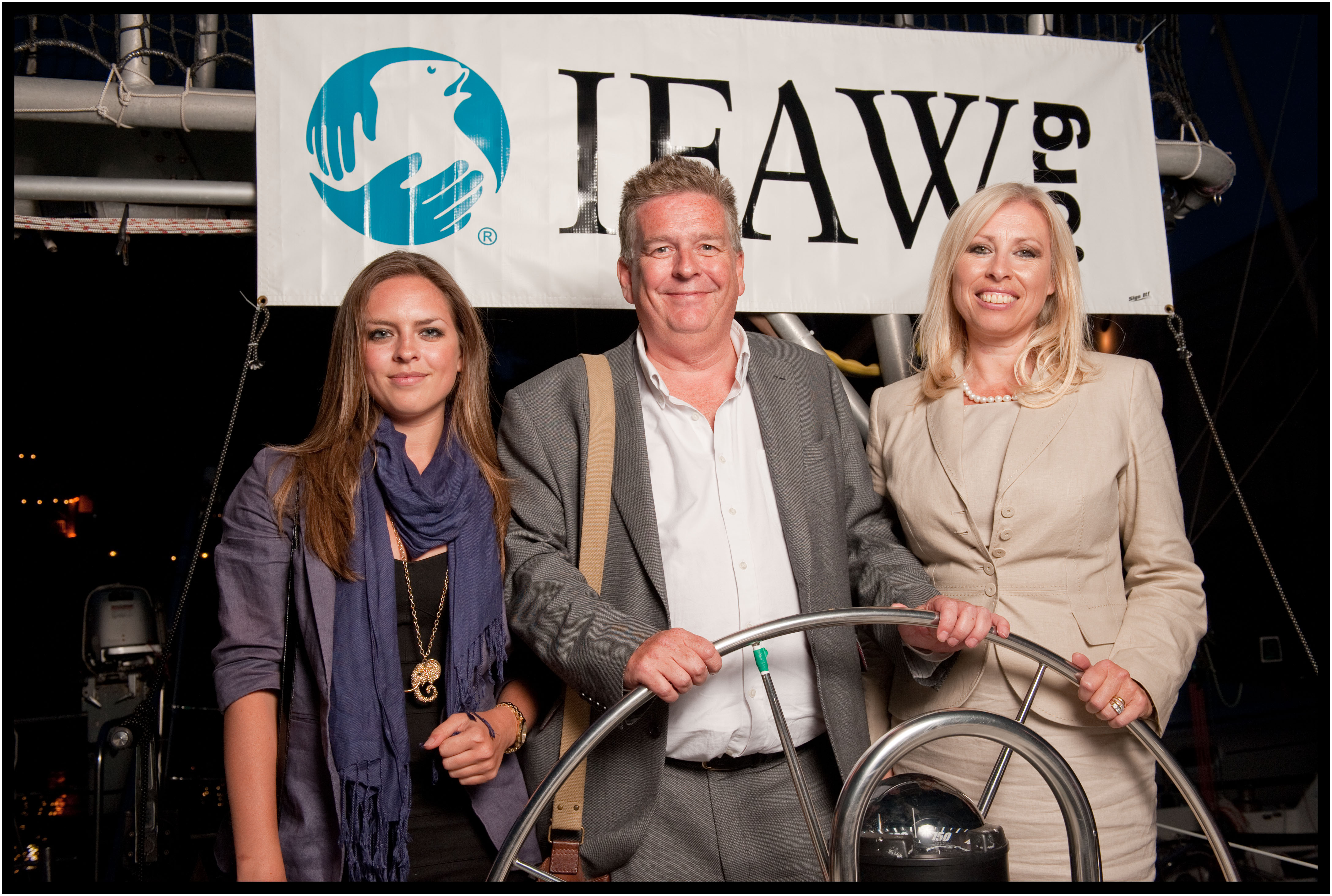
my parents and I above IFAW's vessel ''The Song Of The Whale' at the helm!
I had a great evening meeting the team at IFAW at a reception for MPs to see their whale research vessel’ The Song Of The Whale’ moored in St Katherines Docks in London last night, July 6th 2011.It sets off to Jersey today to the International Whaling Commission 2011 annual meeting. IFAW help to keep the ban on whaling in place. The vessel is important because it demonstrates to MPs that whales do not have to be killed to be studied for ‘scientific purposes’ as some countries claim like Japan. The vessel has state of the art monitoring and photo digitaling equipment.
I spoke to a couple of MPs who were attending amongst many other MPs and Richard Benyon MP who gave a great talk on why we need to protect whales.
The lion trophy hunting issue is a clear example of non-sustainable offtake by sport hunters of a species already in significant decline. Fifty years ago there might have been as many as 200,000 lions in Africa, whereas now there might be about 25,000 remaining on that very large continent. It is estimated that no more than five populations are long-term viable, and these occur in eastern and southern Afric
Putting a stop to lion trophy hunting will be difficult, as the exporting countries are earning considerable sums. It will therefore need to come down to a ban on imports. The UK cannot act alone in this, as it will require a decision from either CITES and/or a decision made under the European Wildlife Trade Regulations
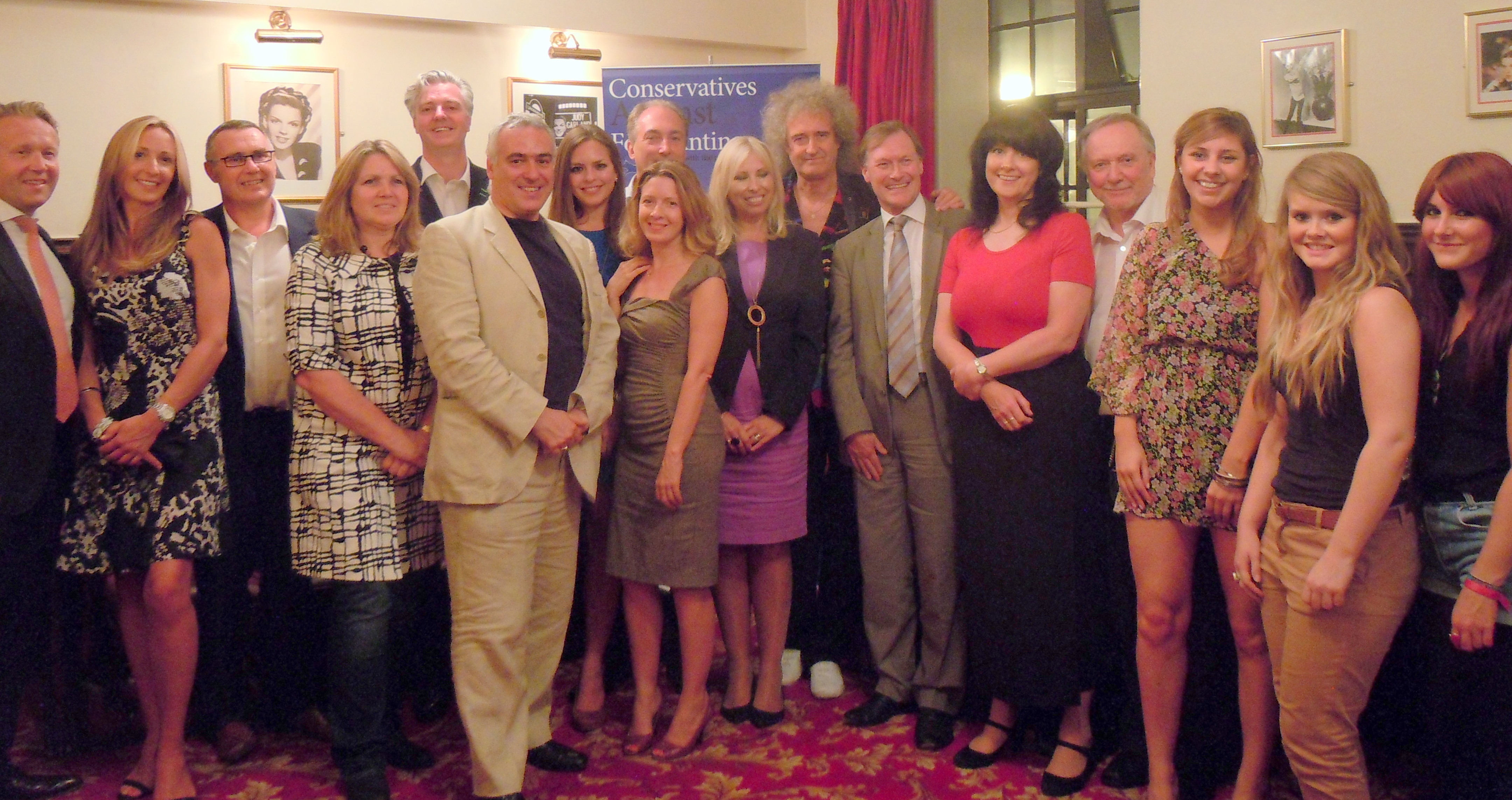
As a Co Founder of CAFH, I helped to host this fantastic event on June 29th with Brian May of Queen! I loved the show and talking to everyone. It was a great night! ‘We Will Rock You’ event with Brian May of Queen on June 29th 2011 at the Dominion Theatre in Tottenham Court Road. The event was a big success and was attended by anti hunting Conservative MPs, David Bowles, the Head of Communications of the RSPCA, Robbie Marsland the UK Director of IFAW, and Douglas Batchelor the CEO of the League Against Cruel Sports, Steve Taylor, Head of Campaigns of The League, Dr Richard Ryder, Trustee and the ex Chairman of the RSPCA and John Cooper QC amongst other guests. The show featured the Queen musical and their hits and the whole theatre rocked with the sound of Queen.
This event celebrated the drive and committment of our animal welfare charities who all share the same community spirit of working to protect our wildlife from a return of hunting with dogs. We all respond to the same drive to defend the Hunting Act 2004 which bans hunting wild mammals with dogs. Conservatives Against Fox Hunting was established last year to support anti hunting Conservative MPs and their stance and also to encourage more Conservative MPs to represent the majority opinion against repeal. The evening was about celebrating our unity to protect wildlife.
We are very grateful to Brian May for his kind hospitality and for providing us with a wonderful live rock show, private reception suite, champagne and canapés etc, and for his personal inspirational welcome.
The below press release is by the Wildlife Aid Foundation.
Wildlife Aid Foundation hails “historic decision” by Parliament.
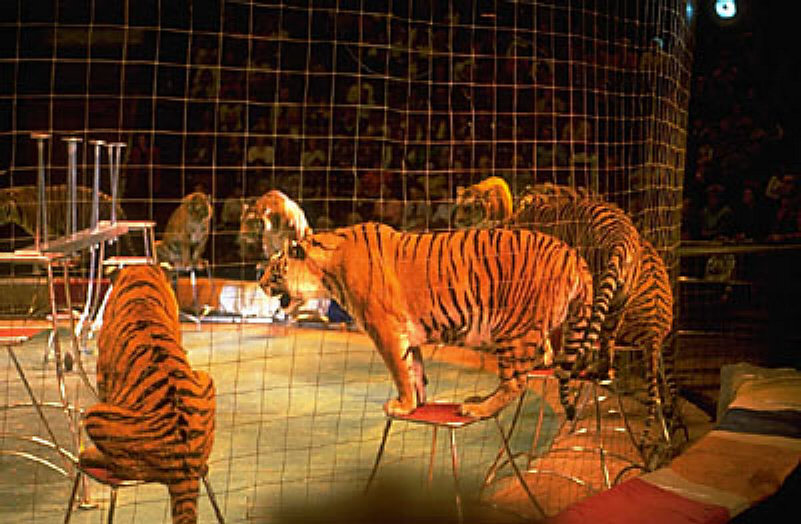
The Surrey-based Wildlife Aid Foundation has congratulated MPs on making “the right choice, the humane choice” by supporting a ban on the use of wild animals in circuses. Following a debate instigated by Conservative MP Mark Pritchard, the House of Commons overwhelmingly approved the introduction of regulations prohibiting the use of wild animals in circuses. There will now be massive pressure on the Government to ensure that the new regulations are brought into effect as soon as possible.
Simon Cowell MBE, Founder-Director of the Wildlife Aid Foundation, said: “Wildlife belong in the wild not in circuses. Most people already recognise this and I am delighted that the House of Commons has at last decided to put a stop to this anachronistic practice which is akin to dog-fighting or bear-baiting. These things shouldn’t happen in this day and age and while celebrating today’s historic decision I cannot help but express horror at the fact that it has taken so long to get to this stage. What shocks me most is that I understand that the Coalition Government actually tried to bully and cajole Mr Pritchard and other Conservative and Liberal Democrat MPs into dropping their support for the ban. Why on earth the Government was so determined to stop Parliament debating the proposal for a ban on circus animals is a complete mystery to me. But after today’s victory for common sense I hope Ministers have learned their lesson. This was the right choice, the humane choice. No civilised society should permit the use of wild animals in circuses and I congratulate MPs on doing the right thing at last by voting to ban it.”
The Wildlife Aid Foundation, which is based in Leatherhead, promotes respect for nature and care and compassion for wild animals
MPs have “golden opportunity to strike a blow for animal welfare” – says Wildlife Aid Foundation
The Wildlife Aid Foundation is calling on MPs to vote for a complete ban on the use of wild animals in circuses.
On Thursday (June 23) the House of Commons will debate the motion “That this House directs the Government to use its powers under section 12 of the Animal Welfare Act 2006 to introduce a regulation banning the use of all wild animals in circuses.”
According to opinion polls, more than 70 per cent of the British public favour a ban on the use of wild animals in circuses. The Wildlife Aid Foundation believes that wild animals belong in the wild and that keeping these animals in captivity and forcing them to perform in circuses is “an appalling example of ignorance and inhumanity”.
Simon Cowell MBE, Founder-Director of the Wildlife Aid Foundation, said: “Parliament has a golden opportunity this week to strike a major blow for animal welfare. The continued use of wild animals in circuses is utterly inhumane, it causes unnecessary suffering, and there is no justification whatsoever for this practice in this day and age.”
Cowell, who also presents the TV series Wildlife SOS, is worried that MPs might accept a watered-down policy of licensing and inspection of circus animals instead of a ban. Licensing is the approach favoured by the Coalition Government. “We are calling on MPs in the Coalition parties to vote according to their conscience rather than following the party whip,” said Cowell.
“If the House of Commons fails to vote for a ban this week, that won’t be the end of the story. The issue will not go away and MPs should keep this in mind when they vote on this motion. Keeping wild animals in circuses causes them incredible suffering and there is no place for it in modern Britain.
“If Parliament fails us on Thursday, the Wildlife Aid Foundation and other charities will continue to campaign for an end to the iniquitous practice.”
Olympia, the young matriarch of the OAs, is a graceful-tusked 31-year-old. She became the matriarch after her mother died in the 2009/2009 drought. How she copes with such a responsibility at a relatively young age will determine how well her family fares.
Whenever I’m asked about elephants and the work I do, I invariably end up talking about matriarchs, as they form both the core of elephant society and the core of this study. Why are matriarchs so important to that society?
A matriarch is a leader of an elephant family, and is usually the oldest female in that family. My particular interest within the Amboseli Elephant Research Project (AERP) focuses on what is happening to families who lost their matriarchs in the devastating 2008/2009 drought.
Elephant families revolve around females. Males leave at puberty and become socially independent, but females remain within their families for their whole lives. They rear their calves alongside their mothers, grandmothers, sisters and aunts. Elephant families are extremely fluid in their association patterns meaning that not all members are together all of the time. This wonderful flexibility and fluidity in elephant society, which we call “fission-fusion”, is one of the things that I find so fascinating about elephants.
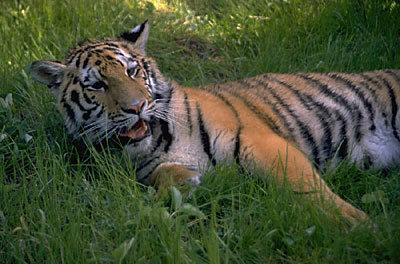
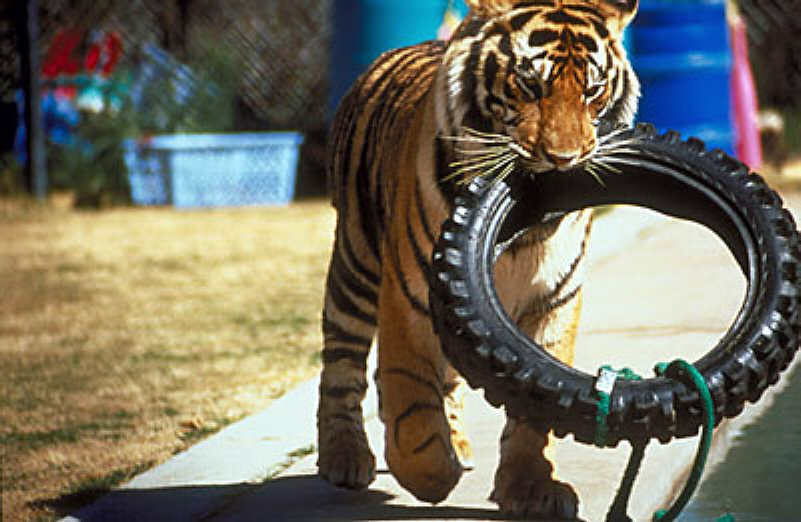
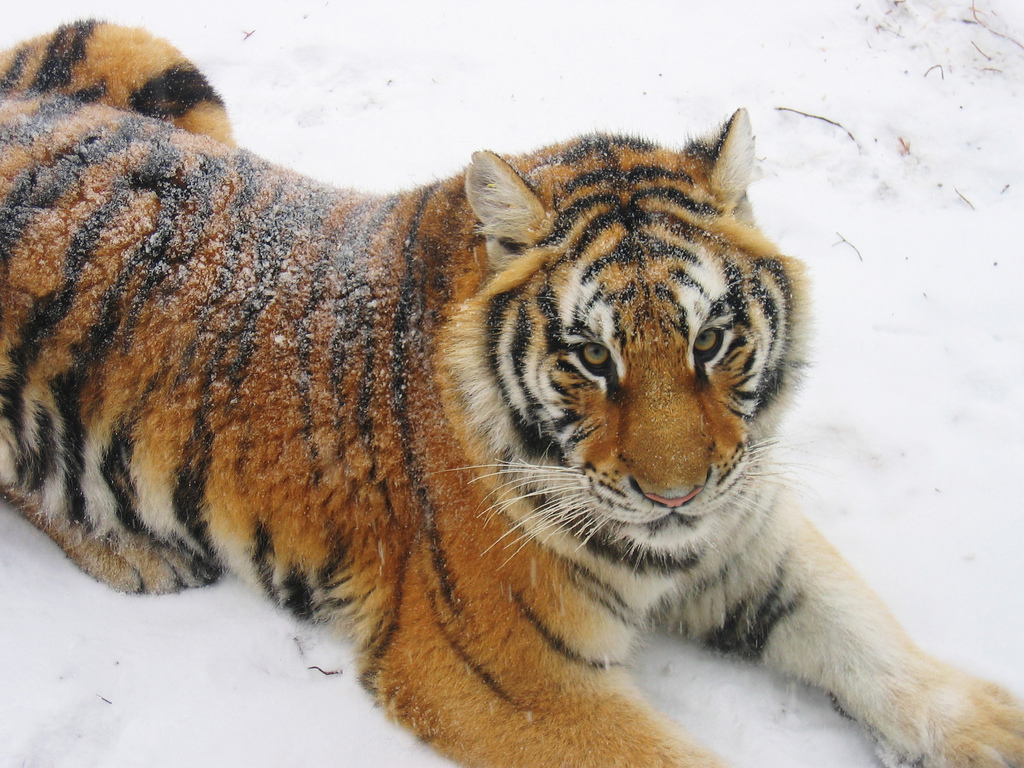
Please support David Shepherds’ ‘Tigertime’ campaign. Poaching is destroying the tiger and if we do not act now this iconic tiger could be extinct in less than 20 years. The demand for tigers parts for trophies and traditional Chinese medicine has driven the tiger to the brink of extinction. 96.5% of wild tigers have been slaughtered in the last 100 years! How appalling is this?! We don’t want to be the last generation to see tigers in the wild- do we? There are just 3,500 tigers left!!
sign up here now; www.tigertime.info Tell your friends and spread the message.
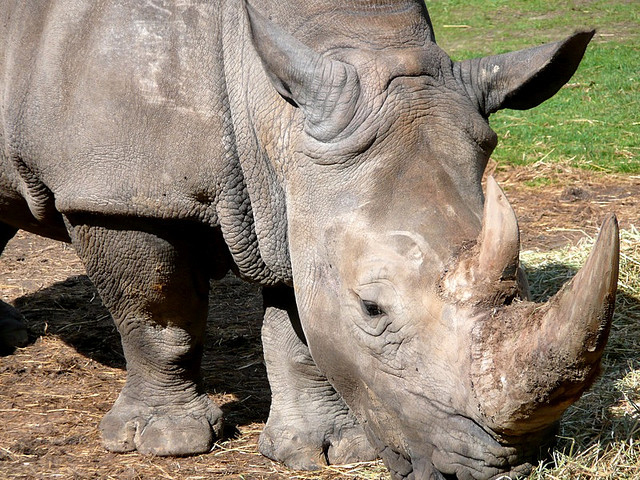
Rhino poaching is a huge problem. Many rhinos are being killed simply for their horns which is now said to be worth more than gold in value. These animals are very vulnerable and need strong protection.
Two rhino poachers were arrested in the Kruger National Park on Friday 3rd June 2011 shortly after two white rhinos were shot and killed and their horns removed in the Nwanedsi area of the park.
During the incident one of the suspected poachers was shot and wounded and is currently receiving medical attention in hospital. Two firearms, an AK47 and a .375 heavy calibre hunting rifle, as well as three rhino horns, were recovered during the combined South African National Parks (SANParks), South African National Defence Force (SANDF) and South African Police Service (SAPS) operation.
The somewhat contentious debate on the issue of ‘sustainable’ trophy hunting rages furiously on, dividing opinions and generating passionate conversations. For those who support trophy hunting, the practice can be argued as a sustainable method of generating income for local communities, promoting tourism and well, being simply ‘fun’. However, those of us who cannot understand the pleasure in killing animals for sport are left baffled by the flawed logic presented to us, and used to pervert conservation policies.
They argue that trophy hunting creates incomes in degraded areas where photographic tourism is not viable, but it is often claimed that due to leakages and corruption, hunting revenue rarely reaches the community that they are said to.
Not only is the economic argument questionable, so is the sometimes often irresponsible behaviour of the hunters themselves. Mistakes have happened through trophy hunting. In April 2010, one professional hunter shot and killed a lion known to the public as ‘Leonardo’, who was also a research subject, when his permit only permitted him to kill a problem lioness in Anabeb Conservancy. Instead, the hunter shot and killed Leonardo at Sesfontein Conservancy. This example demonstrates how difficult it is to have complete control of the behaviour of hunters. Likewise, in Namibia unethical methods of hunting were being used such as the use of hounds, and also the practise of catching and drugging and releasing the animal, so that it becomes an ‘easy shot’.
The excessive use of trophy hunting, has in recent years had destructive impacts on the local leopard and cheetah populations in Namibia, for the past two decades over 200 leopard trophies were exported per year, with the number growing to 300 in 2008. The total lion population for the entire African continent has decreased by 70% in the past decade, dropping to 16,500, yet each year around 600 lions are legally killed due to trophy hunting. Similarly, it was reported in Namibia in March 2011, that the spotted hyena population was ‘fragmented and unstable’ due to persecution and trophy hunting.
To me, the argument in favour of trophy hunting seems particularly hypocritical. It seems we are forced to question what ‘Conservation’ truly means, for if it is as described in the dictionary as the ‘protection, preservation, and careful management of natural resources and of the environment’, shouldn’t we be protecting our fragile wildlife from what some people term ‘environmental terrorism’, instead of accepting money from those who enjoy killing wild animals for recreation and allowing their populations to be persecuted for sport? The answer is clear to me.
Trophy Hunting/ Sustainable Hunting..Why I disagree
I have thought long and hard on this subject and I am well aware of the extreme complexity of the argument, and the genuine reasoning behind some of the arguments put forward in its defense.
My take is that as a society and individuals we have a responsibility to educate and spread a message that we have to treat animals with respect. They share our planet and our environment with us. Over the years there as been a cultural evolution in the way that we relate to our wildlife. This can be definitely seen in the attitudes of the younger generation. By condoning sustainable hunting, even on the premise that it gives back to the community, we are saying that it is acceptable to treat animals as a sport and it disrespects their status to co-exist. We will never educate our society if we continue with this attitude . In accepting the short term benefits from sustainable hunting we are perpetuating the long term attitude that wild animals are a commodity or a sport. As I always argue, where an animal needs to be managed it needs to be done by the professionals and not sports people.
While at the League Against Cruel Sports summer reception event at the House of Commons on Wednesday I met Care for the Wild International Director Mark Jones, who amongst other noble animal welfare projects, is currently campaigning for a ban on the sale of live turtles by Tesco in China.
Tesco continue to sell live turtles, regardless of the fact that that two fifths of the world’s tortoises and turtles and three quarters of Asian species are at risk of extinction due to human consumption. There is even a CITES (Convention on International Trade in Endangered Species) legislation restricting trade in turtle species. Likewise, the species that is sold in the stores, the softshell turtle (Pelodiscus sinensis) is consequently listed as vulnerable on the IUCN Red List of Endangered Animals as a direct result of harvesting for food. By promoting the sale of turtles for food, many would claim that Tesco are arguably actively contributing, and therefore partially responsible, for the global decline of turtle populations. The attitude of Tesco of continuing to sell these turtles despite pressure from Care For The Wild International’s concerns, further raises questions on corporate ethics, for one of Britain’s largest chains is profiting from the sale of these live vulnerable animals.
Through tireless campaigning CWI have managed to alter Tesco’s treatment of live produce slightly, for example Tesco only sell farmed specimens of one species, and they have slightly improved the method of in-store slaughter, but this is not enough. By allowing customers to purchase live animals, Tesco have no control over the slaughter methods people will use at home.
Sadly, a lot of people don’t know about Tesco’s treatment of live animals in their supermarkets, I didn’t until recently, so it is so vitally important that we spread awareness of this issue, and ask Tesco to change their policy.
I took time out from my end of year exams to jump on a train and attend the League Against Cruel Sports Summer Reception held on the terrace at the Houses of Parliament last night. It was a fantastic event and addressed an issue that I have been actively campaigning on for the last 15 months or so for the retention of the Hunting Act 2004 which makes it illegal to hunt deer, hare and foxes with dogs. What a great event. What a fantastic venue.
I also met my friends from IFAW including the UK Director Robbie Marsland and his wonderful team. I also met the head of communications at the RSPCA, David Bowles, and Mark Jones Director of Care for the Wild International.
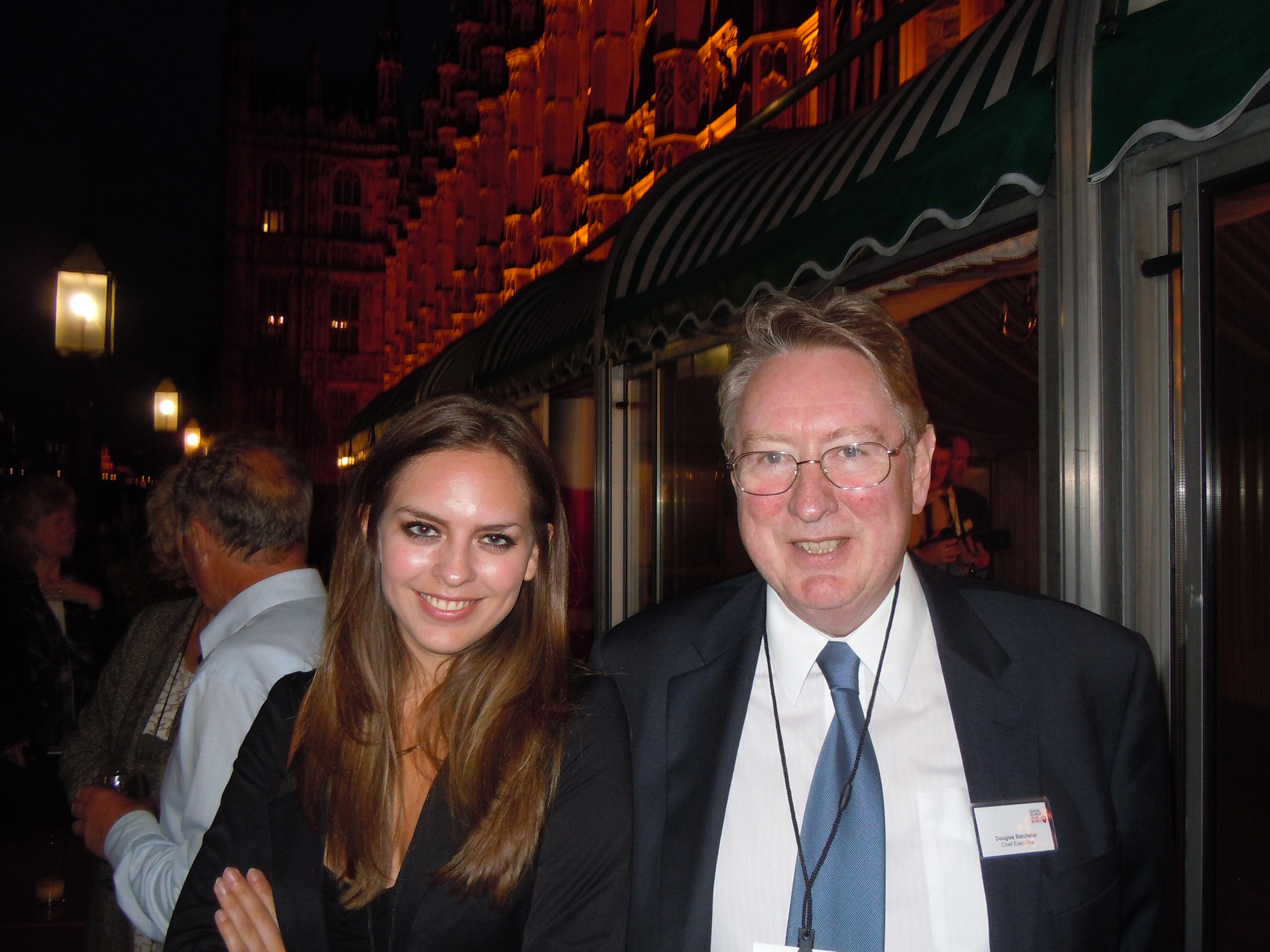
Douglas Batchelor CEO, The League Against Cruel Sports and me, House of Commons, Westminster 18 May 2011.
Roger Gale MP, President of Conservative Animal Welfare (CAW) and a tireless ambassador for animal welfare at home and abroad.
Don Porter CBE, Chairman of Conservative Way Forward and former Chairman of the Conservative National Convention.
Chris Williamson MP, who hosted the event and is a Trustee of The League Against Cruel Sports.
Did you know that Africa’s lion population has declined by at least 50% in only 20 years?
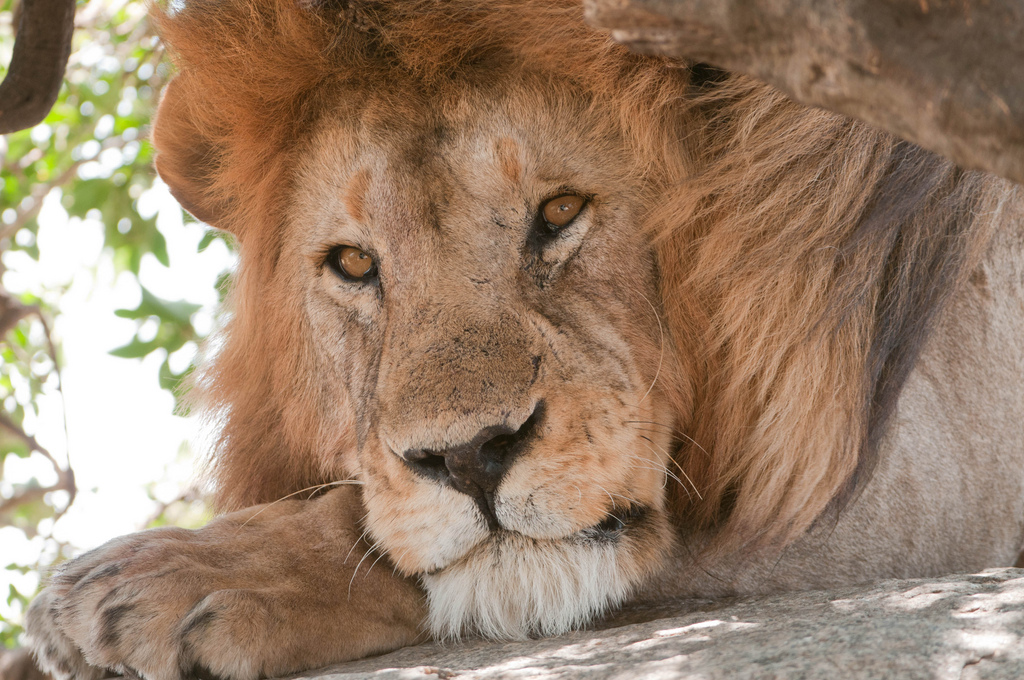
When will people start caring? In the 1980’s the African lion population was a strong estimation of 150,000-200,000, but today the numbers have crashed to a mere range of between 18,000 and 25,000, and if something isn’t done soon it will continue to decline until we are at risk of losing one of Africa’s most iconic animals, because we failed to act.
Due to causes such as retaliatory killings, over exploitation by trophy hunters, rapidly increasing loss of habitat (they now only cover about 1/4 of their historic range) and a flourishing trade largely fuelled by primitive myths – lion bone wine anyone? the African lion faces a bleak future unless we try to amend the damage we have done now. Two-thirds of Africa’s lion population are not yet sufficiently protected, but there is hope. On March 1st 2011, a coalition of wildlife and conservation organizations (Born Free USA, Born Free Foundation, Defenders of Wildlife, The Fund for Animals, Human Society International, The Humane Society of the United States, and IFAW) petitioned the Secretary of the Interior to list the African Lion as an endangered species (currently listed as vulnerable) according to the United States Endangered Species Act (ESA). Read the full petition here.
But what difference will it really make? Well actually a big difference! The move to endangered will prohibit the importation of African lions and their parts to the United States, who are currently the world’s largest importers threatening these big cats. Equally, the change in classification will help raise awareness of the plight of these majestic animals, and encourage CHANGE.
Make sure you watch this video because for every person who views it the National Geographic have pledged to donate $0.10 (until the video hits a million views) to help the cause of these vunerable animals.
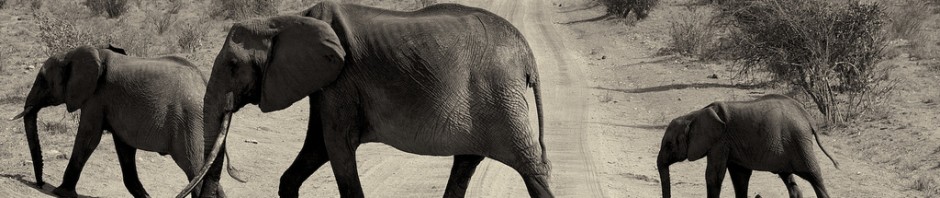
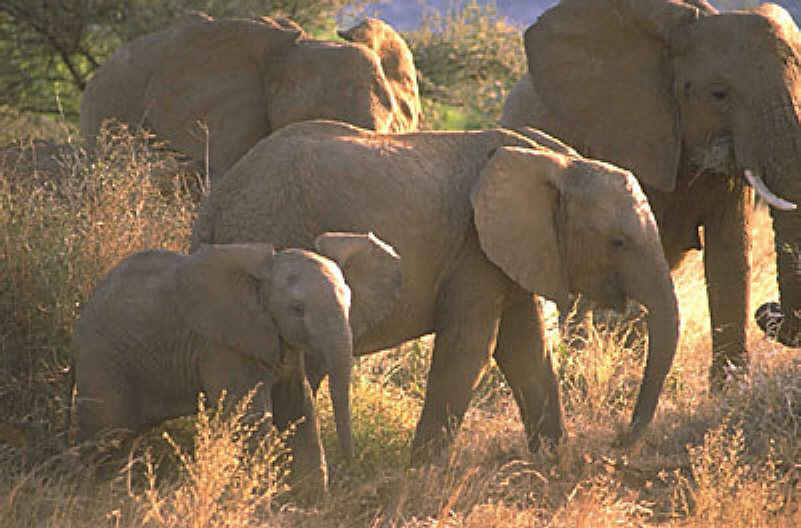
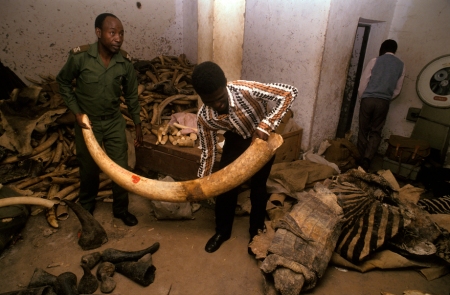
Wow. The population of the African elephant in the 1980’s was around 1 million. Now, there is a total population of less than 460,000. These enormous, intelligent and highly sociable mammals are still being slaughtered for their ivory and meat, with some populations in Africa perilously close to extinction, despite the 1990 Convention on International Trade in Endangered Species (CITES) ban on international ivory sales. The Central African Elephant for example, could be extinct in less than three years, and others are expected to permanently vanish from their natural habitats in the next 20- 50 years. We cannot let this happen!
In 2009 IFAW reported that over one hundred elephants were being killed daily for their tusks. That amounts to 36,500 elephants a year, being savagely slaughtered to fuel a billion dollar black market. African Elephants are under CITES Appendix II, in South Africa, Botswana, Namibia, and Zimbabwe, which means some regulated trade of ivory is permitted.
What can we do? There more noise we make, and the more people are aware of the plight of the elephants, the more pressure we can put on government officials to strictly enforce laws protecting these animals. Likewise, we can put pressure on CITES to restore the full ban on ivory trading. You can sign IFAW’s petition to end the international ivory trade here.
9 Conservation policies for sustainable living, as said by WESSA
1) Respect and Care for community of life.
2) Improving the quality of life.
3) Conserving the earths vitality and diversity.
4) Minimize the depletion of non-renewable natural resources.
5) Keep within the earth’s carrying capacity.
6) Change personal attitudes and practices – A BIG ONE
7) Enable communites to care for their own environments.
8 ) Provide a national framework to integrate development and conservation.
9) Forge a global alliance.
The problems of conservation are widely thought of as being biological issues, but there is more to it than than just that. We must consider all of the political, social and ethical aspects too if we are to make an impact, and a change for the better.
Having personally met Dr Antoine Goetschel at the ALAW (The Association of Lawyers for Animal Welfare) offices in Bloomsbury, London, in April 2011, and listened to his lecture, I fully understand the importance of political legislation in making a difference to peoples attitudes and behaviour in the long run. Signing petitions, lobbying politicians and changing legislation means a changing of attitudes!
I have just finished reading Moby Dick written by Herman Melville in 1851, in preparation for my Uni exams. After persevering through endless chapters of numbingly minute nautical detail and obscure political symbolism, I eventually found one chapter that particularly stood out to me, I’m sure you will see why, it is entitled 105- Will He Perish?
In this chapter, the narrator, Ishmael, argues in the defence of his profession of whaling, claiming there is no valid argument supporting any possible extinction of whales. His argument proceeds thus:
“at one hunting the King of Siam took 4,000 elephants: that in those regions elephants are numerous as droves of cattle…there seems no reason to doubt that if these elephants, which have now been hunted for thousands of years, by Semiramis, by Porus, by Hannibal, and by all the successive monarchs of the East – if they still survive there in great numbers, much more may the great whale outlast all hunting…”
Oh, how wrong you were Melville! The continued practice of commercial whaling has had a devastating impact on the world’s whale populations, pushing some like the North Atlantic Right Whale, for example, to the brink of extinction – it is estimated there are around 350 of these leviathans surviving. Likewise, the irony (which we are afforded through the vantage point of hindsight) in Ishmael’s argument is only exemplified further when we look at the impact hunting has had on elephants. Over a 10 year period in the 1980’s, Africa’s cross-continent elephant population plummeted from approximately 1.2 million elephants, to 600,000 due to poaching. Although Melville’s attitude is outdated by around 160 years, it still perpetuates itself in the thriving ivory trade threatening elephants, and the ‘scientific’ whaling endorsed by Japan, Norway and Iceland.
Once upon a time, there was a wise man who used to go to the ocean to do his writing. He had a habit of walking on the beach before he began his work.
One day, as he was walking along the shore, he looked down the beach and saw a human figure moving like a dancer. He smiled to himself at the thought of someone who would dance on the beach in the day, and so he walked faster to catch up.
As he got closer, he noticed that the figure was that of a young man, and that what he was doing was not dancing at all. The young man was reaching down to the shore, picking up small objects, and throwing them into the ocean.
He came closer still and called out “Good morning! May I ask what it is that you are doing?”
The young man paused, looked up, and replied “Throwing starfish into the ocean.”
“I must ask, then, why are you throwing starfish into the ocean?” asked the somewhat confused wise man.
To this, the young man replied, “The sun is up and the tide is going out. If I don’t throw them in, they’ll die.”
Upon hearing this, the wise man commented, “But, young man, do you not realize that there are miles and miles of beach and there are starfish all along every mile? You can’t possibly make a difference!”
At this, the young man bent down, picked up yet another starfish, and threw it into the ocean. As it met the water, he said,
“Shamwari is about conserving a fading way of life of wild animals, and has been awarded a number of prestigious International awards for it’s efforts in conservation and tourism.”
Worldwide Experience are offering one extremely lucky person to take the baton and become the new ‘Voice of Conservation’ and spend 3 months at the Shamwari Game Reserve in South Africa working, and living, amongst some of the most majestic and at risk animals in the world. I cannot think of a more exciting and worthwhile way of spending my summer break, helping to promote the causes of Africa’s wildlife and contributing my passion to the fantastic conservation effort of the hardworking volunteers already out there. For me, to be the ‘Voice of Conservation’ would serve as a platform to launch myself into my dream career of working to protect what is so most precious to all of us, our world. Having already been one of the founding members of a wildlife campaign in the UK to protect British wildlife from unnecessary cruelty, I would love to be able to be part of protecting wildlife that is at serious risk of extinction.
Did you know that it is estimated that species suffer extinction at a rate of one every 20 minutes?*
In 1995, the Black Rhino for example, hit dangerously low numbers of approx. 2,500 in the wild, but due to conservation efforts that number has slowly risen to around 3,500. Thanks to the fighting of conservation and animal welfare groups, the Black Rhino population is on the recovery. However, they still remain critically endangered. In 2010, it was reported that 333 rhino’s were illegally poached last year in South Africa (323 white rhinos and 10 black rhinos), considering how endangered the rhino population is, these numbers are an absolute tragedy. Likewise, the Javan rhino found now ONLY in Indonesia’s Java Ujung Kulon National Park has a population of only 37-45, a devastating and heart-breaking figure.
In Kenya alone, the lion population is approximately 1,970, and only an estimated 23,000 wild lions across the whole of Africa. For Africa’s carnivores to thrive, it is vital that their habitats are preserved and protected. These proud animals need space to roam and hunt to avoid conflict with human communities.
Likewise, the African Wild Dog has been mostly eradicated in West Africa and is greatly reduced everywhere else, with the most dense population numbers being found in Southern Africa. It is estimated there is only somewhere between 3,000 -5,500 of these wild dog’s. Like with lions, it is because of habitat fragmentation and increasing conflicts with humans that these animals have found themselves on the endangered list.
Rhino’s, lion’s and wild dogs are only a few examples of endangered species, but there so many more who need our help, you can see the list on the IUCN Red List. It is so important to raise awareness of these critical issues, and help educate people so we can prevent poaching and habitat loss, two of the biggest threats to wildlife.
Environment Secretary Caroline Spelman has announced that the UK Government has pledged £25 million to aid conservation efforts around the world through the Darwin Initiative. She stated:
‘I’m proud of our excellent work under the Darwin Initiative – its project leaders have worked wonders in helping to prevent damage to vulnerable wildlife and Earth’s ecosystems and we are committed to strengthening our global partnerships in the economic and scientific response to protecting our natural environment.’
‘Some of the planet’s richest wildlife is found in developing countries, and over the next four years we’ll make more money and expertise available than ever before to ensure economic development goes hand in hand with protecting value natural habitats and adapting to the challenges of climate change.’
Since its introduction in 1992, Defra’s Darwin Initiative has already spent over £80 million in protecting biodiversity in 156 countries. Darwin projects are broad and varying, but they all typically have money invested into raising environmental awareness, education, research and training. A Darwin scheme has already focused on ensuring the survival of the rather exotically named, mountain chicken frogs. Other schemes have also helped protect river dolphins in Brazil and prevent the extinction of vultures in India. Conservation is so vital to protecting fragile ecosystems, habitats and wildlife, and it is our responsibility to ensure we do all we can to protect our world, so well done on this Defra!
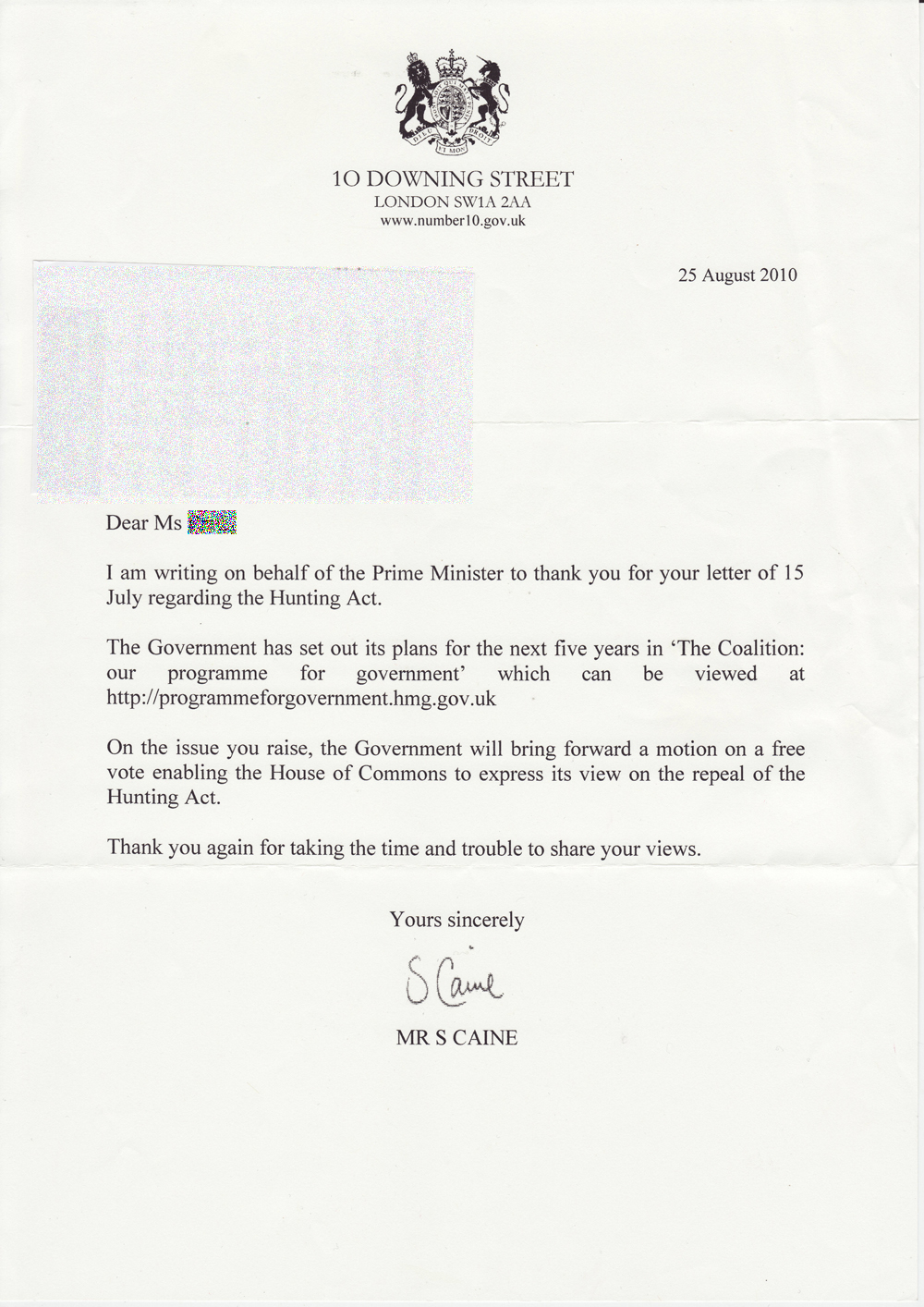
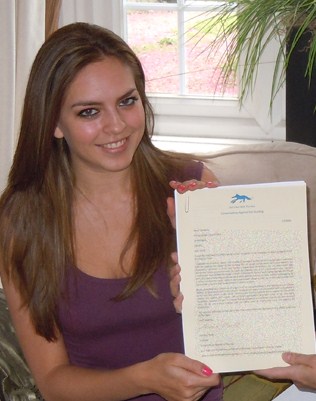
To tackle issues that threaten our wildlife and environment, it is important to speak out so that our politicians are aware of how we feel, and can change things for the better. Last year, we did exactly that, and submitted a petition signed by supporters of the Hunting Act 2004 to the Prime Minister, and received a response! It is all about raising awareness!
Today, 22nd of April 2011, marks the 41st Anniversary of what is widely considered as the birth of the modern environmental movement in 1970. Although originally ‘Earth Day’ was primarily focused in America, it has grown and crossed ocean’s becoming a global celebration of our world in over 175 different countries. Earth Day, or ‘International Mother Earth Day’ is a brilliant force in raising awareness and promoting the issues that threaten our world.
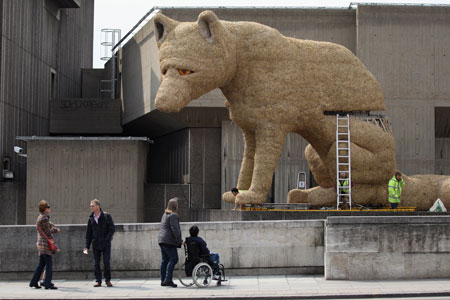
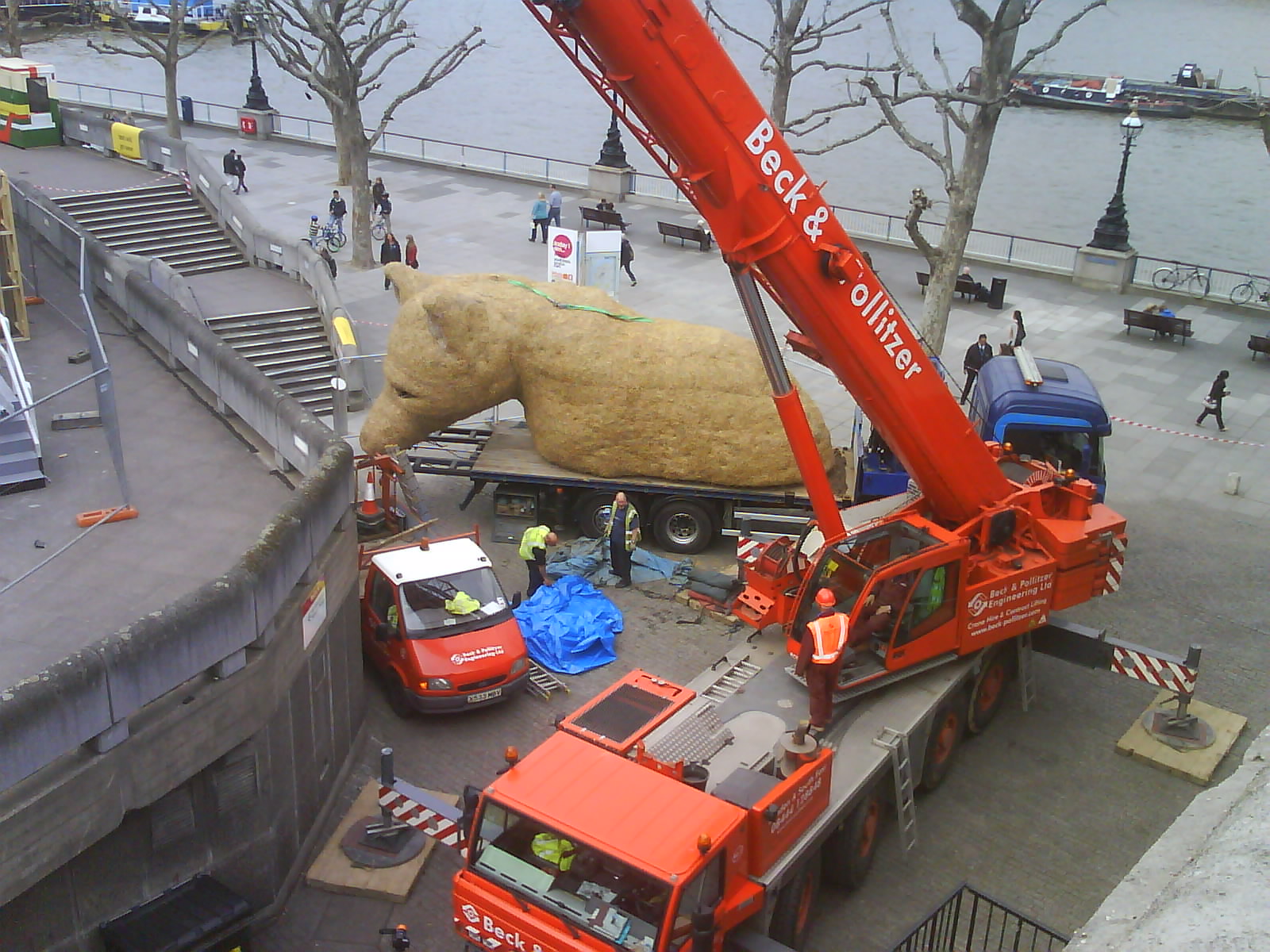
I just got in from a fun night out in central London catching up with a few friends from university. On the way home I ended up chatting to the gentleman next to me, (over our mutual appreciation of a very drunk man’s pole dancing display on the train whilst pushing a supermarket trolley of carpets!) and by absolute chance, he happens to be the mastermind behind erecting a giant installation of a fox at the Hayward Gallery, on London’s Southbank, right next to Waterloo Bridge. What a fantastic way of promoting wildlife to the busy people of London! I really recommend checking it out, I know I certainly will be! It is on display until early September 2011.
The first step to protecting our wildlife is to be aware, and one of the most powerful ways to do this, is through education and communication. It is important that people’s attitudes to wildlife and the environment is one of knowledge and respect.
David Attenborough, the renowned naturalist and broadcaster, said himself on the 14th of April 2011 in The Daily Telegraph, that he was “amazed” by young people’s lack of knowledge regarding wildlife, but their expertise in using computers exceeded his own. It is obvious therefore, that one of the best ways to enhance peoples awareness of wildlife issues most effectively, is through spreading the word on the internet, be it facebook, twitter, a blog, youtube or your own website.
The IFAW film below shows that children in South Africa are watching DVD materials provided by IFAW. The campaign materials help to raise awareness of wildlife and the issues concerning them were sent to the teacher of the school after she emailed IFAW asking for further information to help educate the schoolchildren about endangered wildlife.
Schoolchildren today increasingly use computers and young people communicate socially through the portals of facebook and twitter etc.
Our rhinos and elephants, and hundreds of other endangered species face critical population decline through the loss of both habitation and irresponsible recreational hunting and poaching. As the next generation we are responsible for protecting wildlife rather than using them as the focus of recreational sports. It is all part of a more deeper understanding and respect for our planet and the other creatures we share this world with.
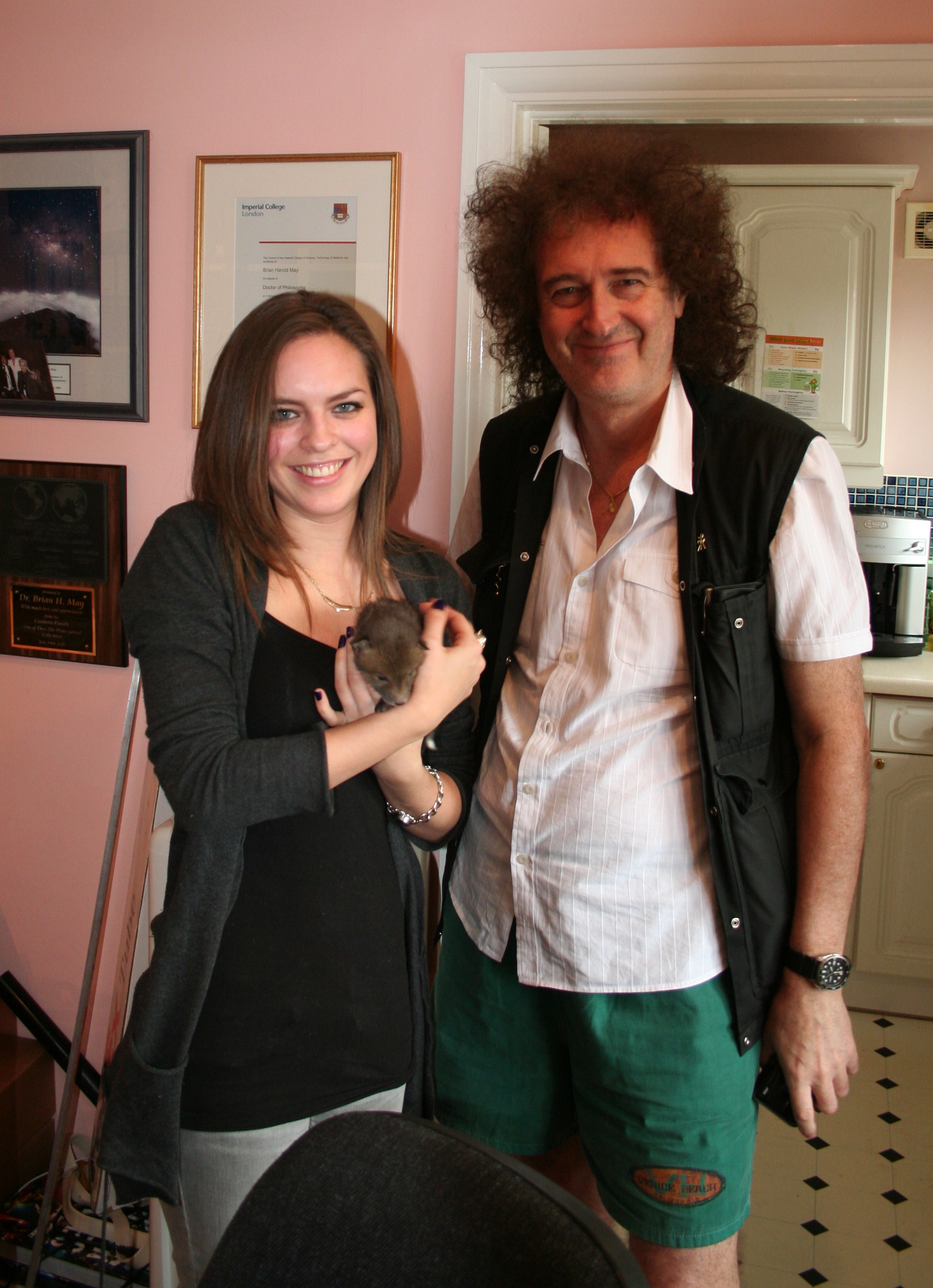
It is almost exactly a year ago now that I was lucky enough to spend some time with two orphaned fox cubs at Brian May’s house (from Queen, Brian also runs an animal welfare organisation called Save Me). The two cubs had sadly lost their parents, but thanks to some compassionate volunteers from Harper Asprey Wildlife Rescue in Surrey, they were able to be raised and released back into the wild.
Copyright to It’s a Wild Life only.
Check out Harper Asprey Wildlife Rescue’s website, they are a great organization for our British wildlife:Harper Aspery Wildlife Rescue.
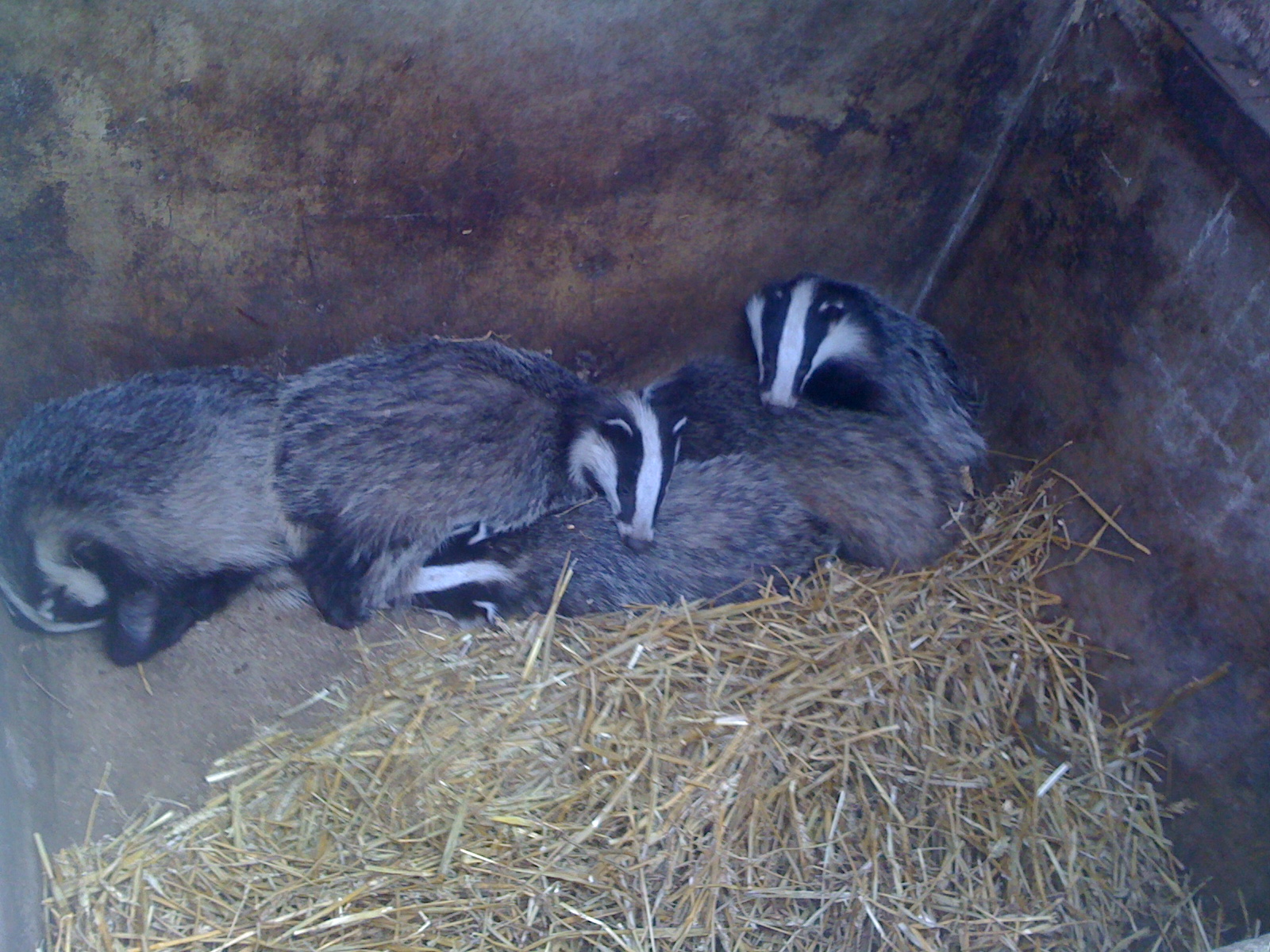
I spent the afternoon yesterday at Wildlife Aid, the home of the tv programme Wildlife SOS, because Emma (my very own big cat) managed to catch herself a young dove. Luckily we have been assured that the little dove is fine, just a bit traumatised and with a few feathers less than he woke up with! After passing him over, I had the opportunity to see some of the rescued animals that some very dedicated volunteers nurse back to health before they are eventually released into the wild. Last year, when visiting Wildlife Aid’s open day I was also invited into a pen with 6 rescued orphaned wild badgers, with the chairman of The Badger Trust, and on the contrary to what many people think of badgers, I found them very friendly and delightfully curious. Check out the websites: Wild Life Aid and The Badger Trust
Speaking of badgers – yesterday held some great news for them concerning the proposed badger cull. As an alternative to badger culling in order to tackle bovine TB in cattle (which alongside the effectiveness of culling being extremely questionable, it is very expensive) the National Trust announced their launch of a four year vaccination programme. You can read the whole article here:


 It's a Wild Life...